The short answer
The best-looking discount is not always the lowest bill. Compare the same meal quantity and delivery station, then count only the discount actually accepted at checkout. This guide contains illustrative calculations, not live coupon codes or guaranteed savings.
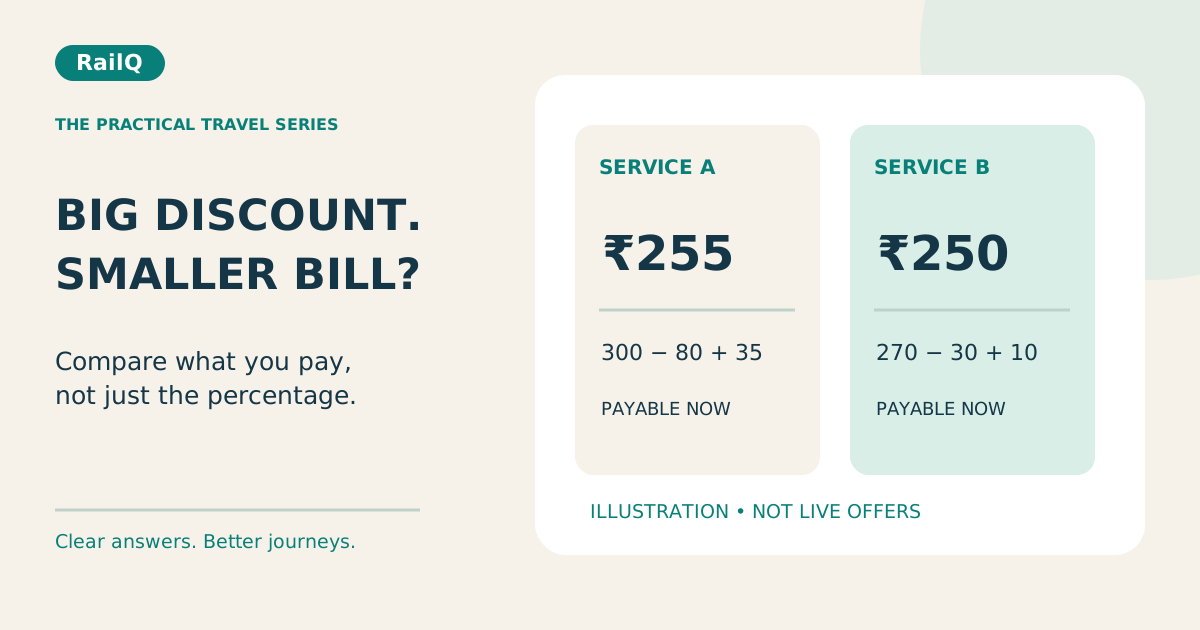
| Bill item | Service A | Service B |
|---|---|---|
| Food subtotal | ₹300 | ₹270 |
| Accepted discount | −₹80 | −₹30 |
| Additional charges | +₹35 | +₹10 |
| Payable now | ₹255 | ₹250 |
1. Separate the offer from the actual saving
A banner may say “up to” a percentage, while the usable discount has a small maximum value. Other offers apply only to selected restaurants, new accounts or certain payment methods. Read the conditions before choosing food. If the coupon does not apply to your train order, its headline value is irrelevant to your bill.
2. Calculate a capped percentage correctly
Example only: a ₹300 eligible food subtotal has an offer of 40% off, capped at ₹80. Forty percent is ₹120, but the cap reduces the discount to ₹80. If the displayed additional charges total ₹35, the payable amount is ₹255: ₹300 minus ₹80 plus ₹35. Use the eligible subtotal shown by the platform, which may differ from the full basket.
3. Compare the final bill for equivalent meals
Example only: service A has ₹300 of food, ₹80 accepted discount and ₹35 charges, giving ₹255. Service B has the comparable quantity for ₹270, ₹30 discount and ₹10 charges, giving ₹250. B is ₹5 cheaper in this example despite its smaller discount. Check that portions, included sides and delivery station really match before using that conclusion.
4. Do not buy unwanted extras to unlock a code
If your intended meal costs ₹240, adding ₹110 of unwanted extras to unlock a ₹70 discount increases the food spend to ₹280 before any additional charges. You have spent ₹40 more than planned. A larger basket makes sense only when you actually need those items or are combining a genuine group order.
5. Treat cashback separately from today’s payment
Check whether cashback returns to the payment account or becomes a wallet credit, when it arrives and whether it expires. A credit that requires another purchase is not the same as an immediate price reduction. For a one-off journey, compare the amount leaving your account today first; record any future credit separately.
6. Check whether the offer fits train delivery
A familiar city-food offer may exclude railway orders or selected restaurants. Even the official IRCTC eCatering homepage states that it does not currently support general discount coupons apart from its described non-delivery compensation coupon. Check that page and your checkout rather than assuming every code advertised on a coupon site is usable.
References: [1]
7. Look at cancellation before chasing the saving
A small saving may not help if the order becomes unsuitable and cancellation carries a deduction. Read the terms before paying, especially when your journey is uncertain. Do not place duplicate orders on two apps to compare acceptance. Compare the baskets first and complete only the order you intend to receive.
8. Keep a simple comparison record
Note the provider, delivery station, meal quantity, subtotal, accepted discount, charges and final total. Avoid storing full PNRs in public sheets or sharing screenshots with passenger details. If a promotion has disappeared, remove it from your plan. This page deliberately does not maintain a list of unverified “working” codes.
Common questions
Do you have a guaranteed working coupon?
No. Eligibility changes by account, station, restaurant and payment method. Use the provider’s current offer and verify acceptance before paying.
Is a bigger percentage always better?
No. Caps, fees, base prices and minimum spends can reverse the result. Compare the final amount for an equivalent basket.